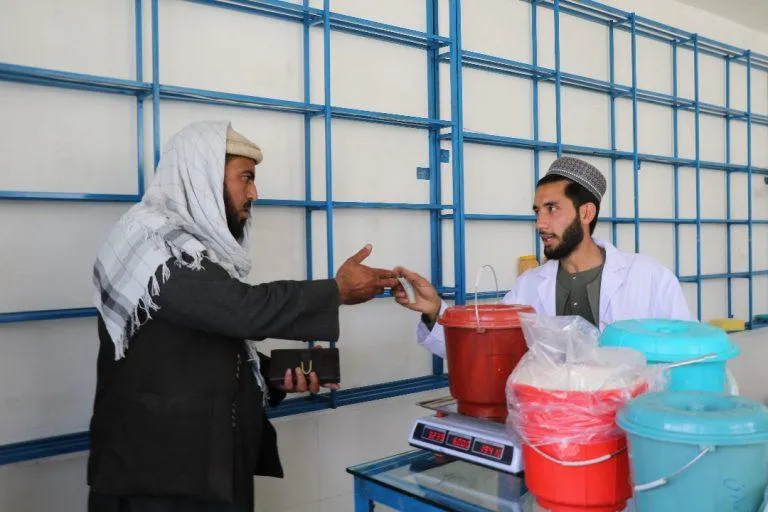
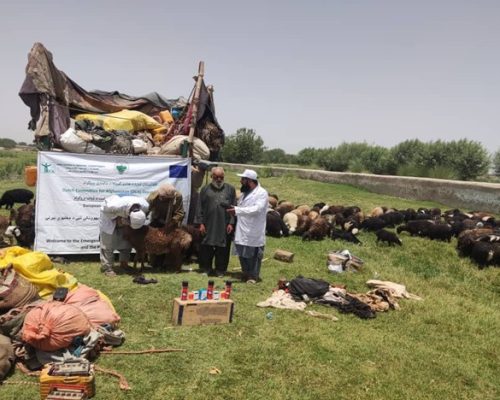
DCA’s trust, access and reach to the communities has been built very well among local leaders and customary institutions in the districts and villages of Afghanistan due to the presence of VFUs. Any kind of intervention can be done through more than 1,000 VFUs nationwide. DCA has also established more than 3,000 male and female basic veterinary workers that serve farmers, pastoralists, and women poultry farmers at small scale levels. A VFU is a location at community level, staffed by one or more veterinary para-professionals (paravets). VFUs are established in the house of a staff member or in a rented premises. Each VFU is equipped with veterinary kits, vaccines and medicines, a solar powered cold chain system, a motorbike, furniture, cattle crush, and signboard. With its projects, DCA aims to cover a large part of Afghanistan. From 2014 through 2018, DCA supported the livestock owners in 30 out of 34 provinces, thus almost nationwide. Since then, regretfully, the geographical scope has diminished to 19 provinces, due to the ending of two large projects.
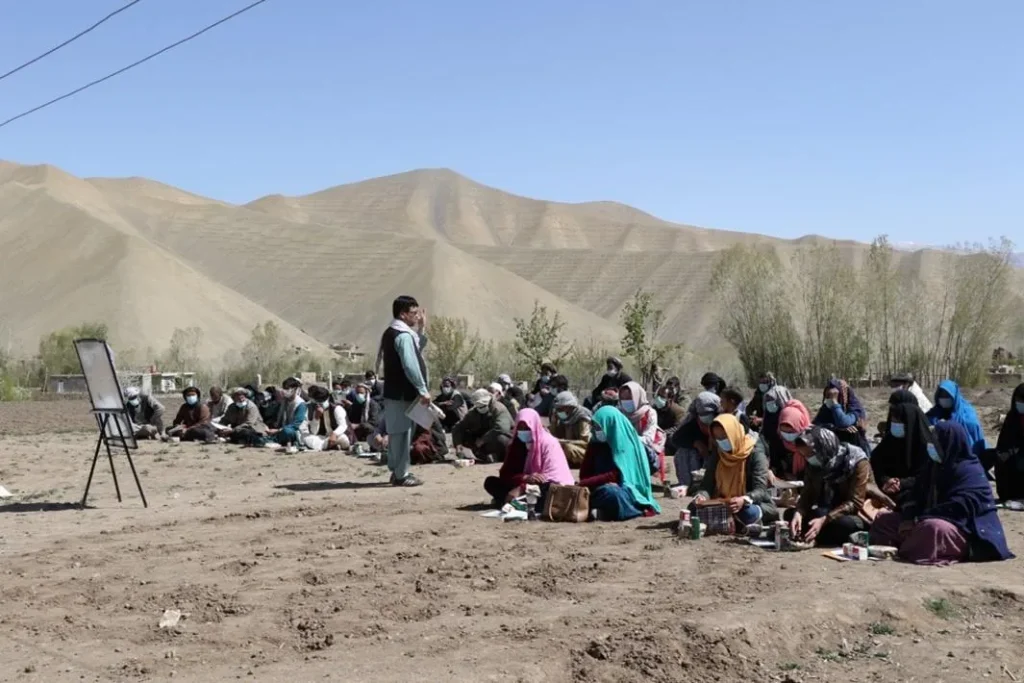
Extension is an important element of the veterinary program of DCA. Creating awareness among the farmers is an essential prerequisite for a healthy livestock population. Extension also effectively promotes the services of the veterinary field units by increasing demand. From 2008, a special Extension Core Team has been established within DCA. This team has raised the extension activities to a new and professional level. Both VFU staff, as well as special extension workers, are engaged in extension activities. All DCA extension workers are mutually linked into a robust extension system and this extension is demand driven and needs based.
An effective and close cooperation between both the public and private sector is key to achieving an efficient and sustainable national animal health network. Private fee-for-service animal health care provided by the VFUs comprises the day-to-day veterinary services for local livestock owners. These services include diagnosis and treatment of animal diseases, vaccination to prevent contagious diseases, and advice on animal health and production. Public tasks by the Afghan government, Ministry of Agriculture, Irrigation and Livestock (MAIL), focus on disease surveillance and control, regulation of the importation, quality control of vaccines and medicines, and policy making. This system of a public-private animal health care and production service is still in development. DCA is actively working together with MAIL and other stakeholders to create the conditions for a well-functioning public-private partnership.
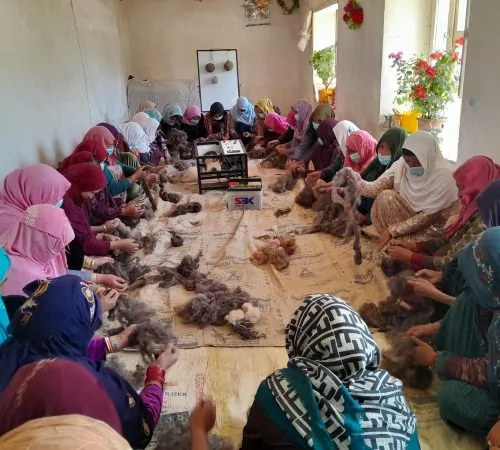
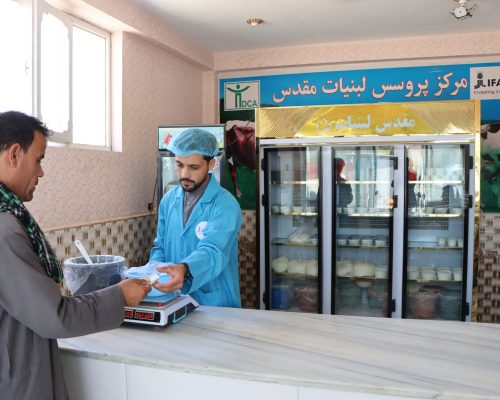
The value chain approach is currently a popular method to encourage poverty reduction and economic growth in developing countries. This approach recognises that a product moves from producer to consumer through a chain of steps. The chain starts with production, followed by harvesting and processing, and ends with marketing. In each of these steps, the actors that are involved in the link add value to the product. That is why the system is called a value chain. By addressing gaps and problems all over the value chain, development organisations can significantly increase their impact on community livelihoods. Targeted pro-poor interventions include improved (access to) inputs and equipment, improved production, harvesting and processing techniques, and enhanced demand and marketing of (end) products.